A comprehensive eye exam checks the health of your eyes, not just how well you see. Dr. J.C. Mungar has examined Oakville families from the clinic on Lakeshore Road West, using digital retinal imaging, with OCT scanning available as an optional additional test.
Most people book an eye exam because their glasses feel wrong. That is a good reason to come in, but the prescription is the smaller half of the appointment. The rest is an examination of the eye itself.
In one visit Dr. Mungar screens for glaucoma, macular degeneration, cataracts, diabetic retinopathy and dry eye. Almost none of those announce themselves. Glaucoma damages peripheral vision so gradually that most people do not notice until a significant amount is gone, and it does not come back.
That is the honest case for regular exams. Not that your prescription might have drifted, but that the conditions worth catching are the ones you cannot feel.
Allow 30 to 45 minutes, or up to an hour if dilation or OCT imaging is needed. If your eyes are dilated your vision will be blurry for a few hours, so arrange not to drive straight afterwards.
Your vision concerns, medications, general health and family history. Diabetes and high blood pressure both show in the eyes, so this is not small talk.
How clearly you see at distance and near, how your eyes work together, and whether your prescription has changed since last time.
Eye pressure, a slit lamp look at the front of the eye, and imaging of the retina and optic nerve. This is the screening half of the exam.
Dr. Mungar walks you through the findings, shows you your own scans, and explains what needs treating, watching, or nothing at all.
What an exam looks for changes considerably across a lifetime, and so does who pays for it.
Fully covered by OHIP. Exams are recommended at six months, around age three, before school starts, then annually. Children rarely report blurred vision because it is all they have known, and a school screening is not the same test.
Children's eye examsEvery one to two years without risk factors. Come sooner if you work long screen days, have a family history of glaucoma, or are strongly short sighted. Usually private pay, and usually claimable through workplace benefits.
About digital eye strain OHIP coveredOne fully covered exam every 18 months, or every 12 months if you have an eligible medical condition such as glaucoma or diabetes. Cataract, glaucoma and macular degeneration risk all climb with age, and all three are far more manageable when found early. Bring your health card and there is nothing to pay.
Ocular health exams OHIP coveredAnnual exams covered at any age. Diabetic retinopathy is a leading cause of vision loss in working age adults and is symptomless until it is advanced, which is exactly why the yearly scan matters.
Diabetic eye examsOntario coverage confuses almost everyone, and the exception in the middle row is the one people most often miss. If you have a qualifying diagnosis, your exam is covered at any age.
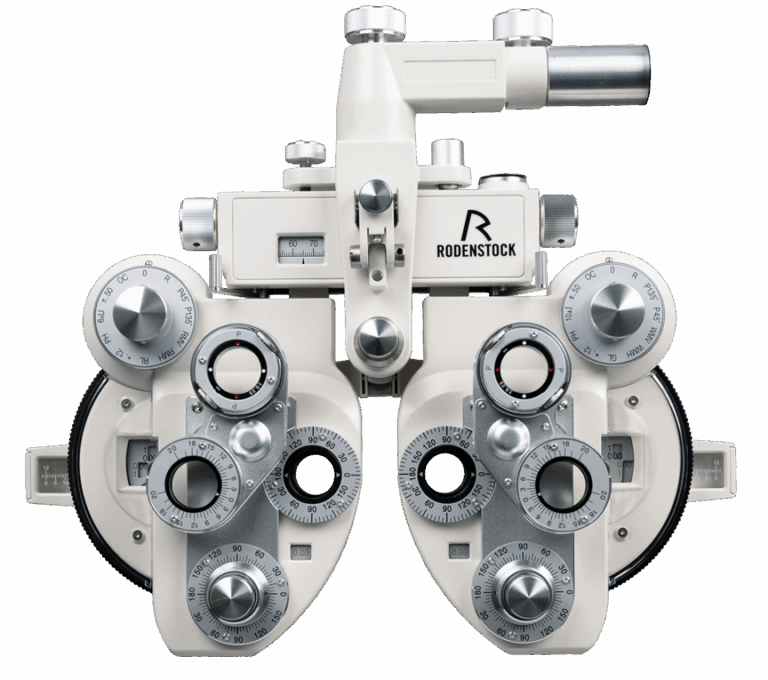
A prescription can be measured with a chart and a phoropter. Detecting disease early cannot, which is where the imaging comes in.
Optical Coherence Tomography produces a cross sectional scan of the retina accurate to a few microns, layer by layer, without touching your eye. It can show thinning at the optic nerve years before you would notice any change in vision. It is offered as an optional addition to your exam, and where it is done each scan is stored so future visits can be compared against it.
That history is the point. A single reading tells you where you are. A series of readings tells you which direction you are heading, and that is what makes early treatment possible. Dr. Mungar will tell you whether he recommends the scan for you. Read more about our ocular health exams or the full range of services we offer.
You see an optometrist, not a technician Every exam is carried out by one of our optometrists, who has your imaging history in front of them.
Results explained in real time You see your own scans on screen and hear what they mean during the appointment, not in a letter three weeks later.
Families, year after year Many patients have been with the practice for years and now bring their own children to the same clinic.
Easy to get to 135 Lakeshore Road West with free parking on site, a straight run from Bronte and convenient for South Mississauga.
Adults aged 20 to 64 with no risk factors should come every one to two years. Children, adults 65 and over, and anyone with diabetes or an existing eye condition should come annually.
Come sooner if anything changes. Sudden blur, new floaters, flashes of light, eye pain or double vision should be seen promptly rather than left until your next scheduled visit.
OHIP covers one comprehensive exam every 12 months for patients aged 0 to 19 and for patients with a qualifying medical condition such as diabetes, glaucoma or cataracts. Patients 65 and over without a qualifying condition are covered every 18 months.
Adults aged 20 to 64 without a qualifying condition pay privately, though most workplace and extended health plans reimburse it. Bring your health card either way.
Usually 30 to 45 minutes. Allow up to an hour if dilation or OCT imaging is included, and longer again if you plan to choose frames afterwards.
Your current glasses and contact lenses, your health card, and a list of any medications you take. Records from a previous optometrist are useful but not required.
If you are having your eyes dilated, bring sunglasses and arrange not to drive straight afterwards.
Not always. Digital retinal imaging gives a wide view of the retina without drops in many cases. Dilation is used when Dr. Mungar needs a fuller view of the periphery, which is more likely if you have diabetes, a retinal concern, or a history of tears or detachment.
If drops are used, your vision stays blurry and light sensitive for a few hours.
No. Optometrists are primary care providers in Ontario, so you can book directly. New patients are welcome. A referral is only needed if you are sent on to an ophthalmologist, and Dr. Mungar arranges that himself.
An eye exam gives you a glasses prescription. A contact lens prescription is different, because a lens sits directly on the eye and needs a base curve and diameter measured against your cornea.
If you want contacts, book a contact lens fitting as well. It is a separate appointment that depends on having a current exam.
That is a common situation and it is never too late. Whether it has been two years or twenty, the appointment is the same and there is nothing to apologise for. If anything, a longer gap makes the baseline scan more useful, because it establishes where you are starting from.
Whether it has been two years or ten, it is never too late to have your eyes checked. New patients are welcome and no referral is needed.
